
I’ve a keen interest in the history of burial grounds and cemeteries in Britain.
I spent the summer of 2008 surveying the Wembdon Road Cemetery in Bridgwater, which at the time was under threat. Long neglected, it had recently been subjected to Sedgemoor District Council’s excessively zealous memorial-toppling policy. Removing genuinely unsafe stones is sensible, of course, but what happened here was absurd, leaving the cemetery littered with toppled headstones and countless trip hazards. There was even talk of sweeping aside the remaining stones and turning the entire area into one featureless field. I have always disliked that approach, and I especially hate seeing it inflicted on historic churchyards.
Elsewhere in the town, even worse was happening. The churchyard of the old Sion Chapel in Friarn Street was slowly being erased. Across the road, the old Unitarian ground had already been dug up, and over the river the Catholic burial ground had recently been destroyed.

I am not especially religious, but the sentiment expressed by Richard Smith Jr. during a heated vestry meeting—reported in the Bridgwater Times on 4 December 1851—still resonates:
“I lay down this proposition, that it is the right of every Englishman to have a place to be buried in; and, being buried, that no mortal being has a right to touch his remains—that they shall remain undisturbed until the resurrection morning.”
Fortunately, I was not the only one dismayed by the state of Wembdon Road Cemetery. By 2010 a group of us formed the Friends, and slowly began to reverse decades of neglect. I have served as chair ever since, though the real progress—the leaps and bounds—has been achieved entirely by the dedicated volunteers who give their time and energy to the place.
When the Wembdon Road Cemetery first opened in 1851, it reflected a growing Victorian belief in dignity, order, and tranquillity in death. Its layout, plantings, and carefully arranged sections were designed not only for burials but for public comfort and reflection. These principles—so central to the original design—make the later neglect and threats all the more jarring. Understanding how the cemetery was meant to function helps explain why restoring it is not just maintenance, but an act of historical respect.
Britain has a deep-seated problem with its attitudes toward cemeteries. The shift from the nineteenth-century garden cemetery to the stark lawn cemetery after the First World War was, in many ways, disastrous. The lawn style works for Commonwealth War Graves cemeteries, but it was retroactively imposed on Victorian burial grounds as a cost-saving measure: less planting, less maintenance, and a clear run for ride-on mowers. As a result, old cemeteries fell into disrepair, and new ones were discouraged from planting altogether. Today, Britain is left with some of the ugliest burial grounds in Europe. Ironically, a modern Danish cemetery more closely resembles how Wembdon Road looked when first laid out than the cemetery resembles its own current state.

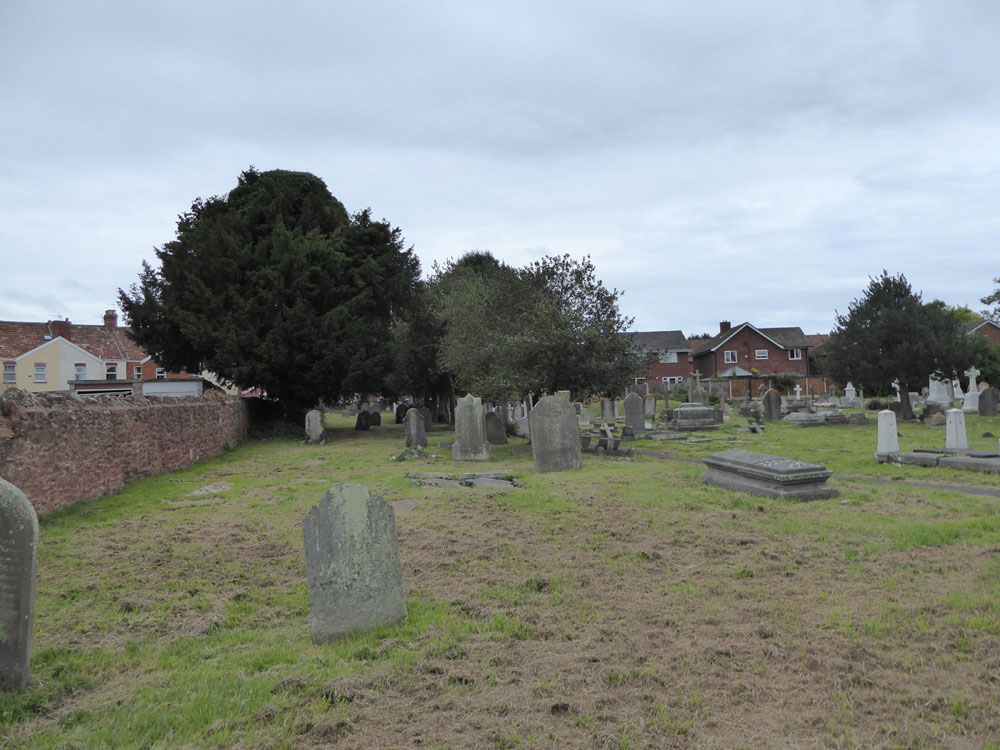
The work by the volunteers itself has been wide-ranging: clearing overgrown paths, repairing and tidying up memorials, researching inscriptions, and uncovering long-buried features of the original design. Each small achievement—trimming the trees, rescuing a forgotten stone, or revealing a once-lost grave border—has helped to re-establish the cemetery’s character. Over time, the transformation has been striking; the site now feels like a place of care rather than abandonment.
Places like Wembdon Road remind us that memory is not just preserved in archives or museums, but in landscapes. A cemetery, when cared for, becomes a quiet teacher: of community, of humility, of history, and of the passage of time. To preserve such a place is to uphold a certain humanity—one that acknowledges that lives once lived deserve dignity, and that the living benefit from remembering them.
I have no relatives buried at Wembdon Road, and there are certainly grander burial grounds elsewhere. Yet it remains a special place—rich in history, character, and meaning—and unquestionably worthy of preservation, as all burial grounds are. I encourage you to explore the websiteand follow the work of the volunteers who continue to restore and protect this remarkable space.
Other Cemetery Adjacent Stuff